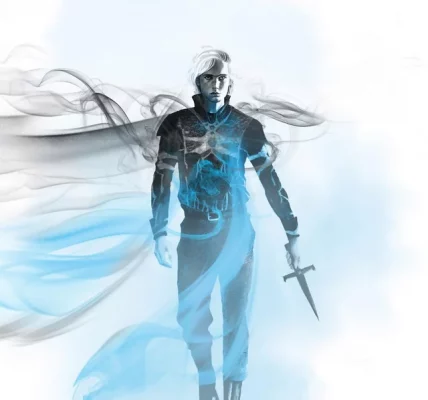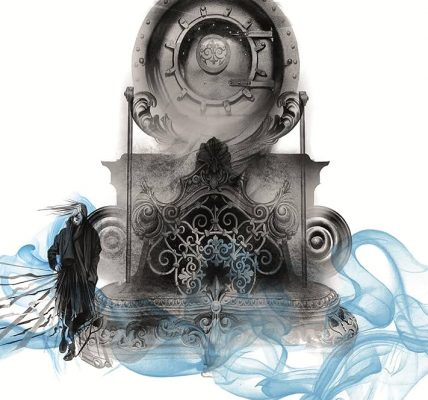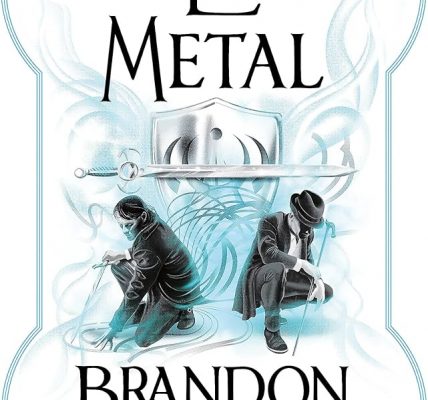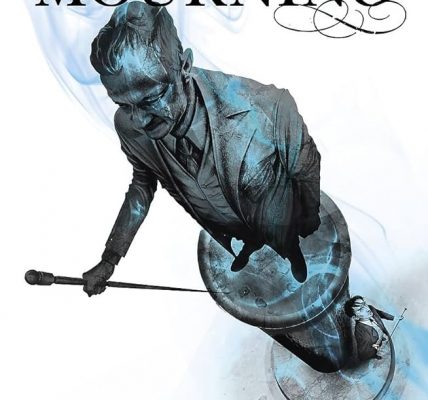

The people of Elendel have Harmony, but can they ever have Autonomy?
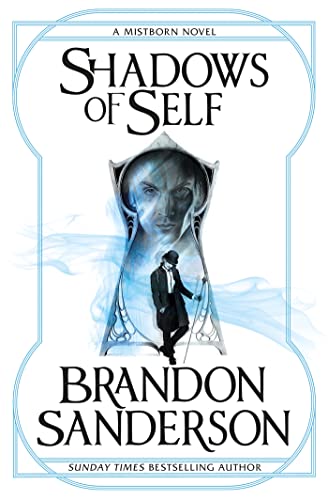
A much more impressive, and frankly more intrinsically tied to the original trilogy, tale of Wax and Wayne as the two lawmakers of The Roughs continue their escapades in the big city. This time, they’ll have to solve a murder at the behest of none other than God himself. This second outing ingrains the mythology of Scadrial into the next era of heroism and provides solid ground for expanding this rapidly evolving part of the Cosmere.
At a convention of the criminally minded, the brother of Governor Replar Innate is found murdered amongst many others. Investigating the crime leads Wax and Wayne down a path away from the modern stage and towards the still-active amphitheatre of the past, where many of the old players are still leading productions. The killer of the governor’s brother is revealed to be a Kandra, a loyal servant of Harmony and a creation of the Lord Ruler. Using the art of hemalurgy that created the Inquisitors of The Final Empire, this rogue Kandra is looking to challenge the authority of the new god of Scadrial.
In Wax and Wayne’s greatest challenge to date, they must uncover this shapeshifter’s agenda and identity. More importantly, they must discover why she is so obsessed with Wax’s past and what her true motives are.
I enjoyed this book a great deal more than the first in the series. While not much longer in length, it feels as though the extra pages were used to reintroduce some characters who were tentatively connected to Era One, along with some of Kelsier’s crew, whom many of us have dearly missed.
While not making a full appearance, both Sazed and TenSoon make their acquaintance with the lawmen of this new era, tying together both periods of Mistborn and even giving some clarity on the 300-year period between Vin and Elend’s passing and Wax’s arrival in Elendel.
It’s also interesting to see characters like MeLaan, who had a minor role in the first trilogy, getting an expansion of their character and the culture of the Kandra, now that they no longer have to fear Ruin. The novel truly delves into this strange period in the Mistborn timeline, where the mythical past and the more modern present can still meet halfway, and the legends of Kelsier, Vin, Elend, and the enemies they battled and the victories they won can still be felt by the society that has thrived thanks to those victories.
What’s perhaps continually interesting is the way in which these protagonists come into their own. Marasi, for example, along with her sister Steris, who initially felt like underdeveloped side characters and potential love interests for the male protagonists, show their own strengths and resolve of character.
Marasi, who was introduced as Wax’s love interest, comes into her own as a police officer looking to prove herself to be more than just Wax and Wayne’s handsomely-skirted sidekick. Steris, too, shows she’s more than just an obstacle keeping Wax from patrolling the Basin for criminal behaviour.
It is still perhaps Sanderson’s greatest, and most obvious, strength in keeping his worlds alive by making them feel as though they are moving forward and not remaining static at a single point in human civilisation. Furthermore, Sanderson is not afraid to look at his own established lore and recognise the loopholes and boundaries that allow for the creation of a rogue Kandra, and even an organisation such as The Set, to use hemalurgy without becoming subservient to Harmony.
All in all, this second outing greatly improves on the first by truly leaning into the Mistborn world and the immortal characters that exist within it, while also establishing the characters of the new era and the new challenges they and future generations will have to face. Ruin may have been defeated, but this little planet out by itself in the cosmos is not exactly safe from all cosmic threats.
8.5 out of 10.